

Hiking is one of the most loved outdoor activities in the United States. Whether someone wants fresh air, beautiful views, or a fun challenge, hiking offers all of it. But many beginners often get confused between a day hike and an overnight hike. They may look similar, but the planning, gear, effort, and overall experience are very different.
Understanding these differences will help you choose the right type of hike based on your comfort, fitness, time, and outdoor experience. This guide explains everything in simple words so even complete beginners can decide which type of hike suits them best.
What Is a Day Hike?
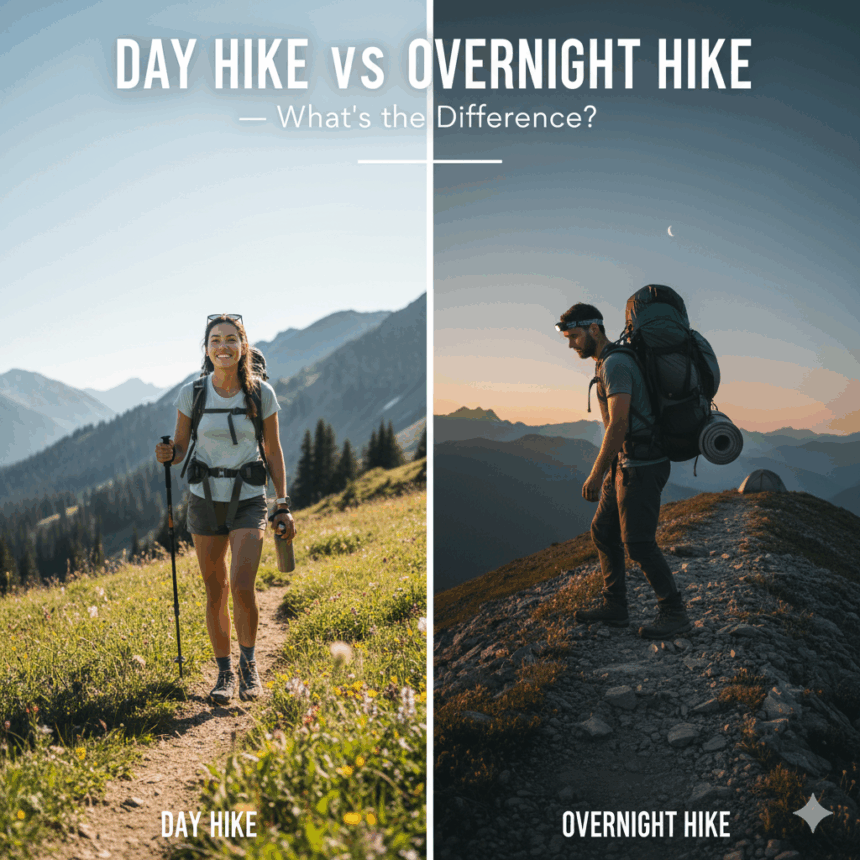
A day hike is a hike that you start and finish on the same day. You do not camp or sleep outdoors. You simply pick a trail, hike for a few hours, and return home or to your hotel before sunset.
Most day hikes range from one hour to eight hours. They are perfect for beginners because they do not require much planning or heavy gear.
Many day hikes in the US are located in state parks, national parks, and local trails that are easy and beginner-friendly.

What Is an Overnight Hike?
An overnight hike is a hike where you walk during the day, sleep outdoors at night, and continue hiking the next day. You sleep in a tent or under the stars. This is also called a backpacking trip.
You carry all your essentials, including food, water, clothes, a sleeping bag, a tent, and safety equipment. Overnight hikes offer a deeper connection with nature but also require more planning and skill.
Many popular overnight hikes in the US include sections of the Appalachian Trail, Pacific Crest Trail, and various backcountry routes in national parks.

Key Differences Between a Day Hike and an Overnight Hike
Even though both involve walking on trails, the experience is completely different. Here are the main differences explained simply.
Time Required
A day hike is short and simple. You complete the entire hike in a few hours. You do not have to worry about setting up a camp or hiking in darkness.
An overnight hike takes two days or more. You spend the night outdoors and continue the next morning. This requires more time and commitment.
Gear and Weight
A day hike requires light gear. You only carry water, snacks, sunscreen, a map, and maybe a light jacket.
An overnight hike requires much more. You need a tent, sleeping bag, stove, food, warm clothes, lights, and more. This makes your backpack heavier, often weighing 25 to 35 pounds.
Planning and Preparation
Day hikes require basic planning. You check the weather, pick a trail, wear comfortable shoes, and go.

Overnight hikes require detailed planning. You must decide where you will camp, how much food you need, where water sources are located, what safety tools you need, and whether you need a permit. You also need basic camping skills.
Fitness Requirements
Day hikes can be easy to moderate. Most people can complete them with basic fitness.
Overnight hikes require more strength because you walk longer distances with a heavier bag. You also deal with more challenging terrain.
Safety Considerations
Day hikes are generally safer because you return before dark. You avoid temperature drops, wildlife activity, and weather changes.
Overnight hikes need stronger safety awareness. You must protect food from animals, stay warm at night, manage unexpected weather, and navigate the trail carefully.
Comfort and Experience Level
Day hikes offer comfort. You return to a warm bed, home, or hotel after your hike.
Overnight hikes offer adventure. You sleep under the stars and wake up in the middle of nature. But they come with less comfort because you sleep on the ground and depend on limited resources.
Cost Difference
Day hikes are affordable. You only spend money on transport, snacks, and park entry fees if needed.
Overnight hikes cost more because you need camping gear, food supplies, and sometimes permits. Buying proper gear requires a larger investment.
Which One Should Beginners Choose?
If you are new to hiking, a day hike is the best place to start. You can understand your stamina, learn how to read trails, and get comfortable walking on different terrains.
Once you complete several day hikes confidently, you can try a short one-night backpacking trip. This helps you slowly get used to carrying weight, camping, and planning longer routes.
Benefits of a Day Hike
Day hikes offer the perfect balance of simplicity and enjoyment. They help you stay active, enjoy nature, and explore different places without too much planning or cost.
They also allow you to try different trails more often. You do not need special gear, making them a great choice for beginners.
Benefits of an Overnight Hike
Overnight hikes help you connect with nature on a much deeper level. You get to watch sunsets and sunrises from the mountains, stay away from city noise, and enjoy quiet natural surroundings.
They help you build strength, confidence, and outdoor survival skills. Spending a night in nature feels rewarding and unforgettable for many hikers.
Common Mistakes Beginners Should Avoid
Many beginners start without checking the weather, which can lead to problems. Some underestimate the difficulty of a trail or carry too little water.
Another mistake is attempting an overnight hike without enough experience or proper gear. This can make the trip uncomfortable or unsafe.
Take things slowly, learn step by step, and prepare properly. This will make your hiking experience enjoyable and safe.
Day Hike or Overnight Hike: Which Is Better?
Both hikes offer great experiences, but each suits different types of hikers.
A day hike is simple, shorter, lighter, and beginner-friendly.
An overnight hike is longer, more adventurous, and requires better planning.
Your choice depends on your goals. If you want a quick nature escape, choose a day hike. If you want a more immersive outdoor adventure, try an overnight hike once you’re ready.
For more hiking tips, gear reviews, and beginner guides, you can explore other helpful articles on TrekkingCafe.com.
Conclusion
Whether you choose a day hike or an overnight hike, both can help you enjoy nature and stay active. A day hike gives you a simple and refreshing experience, while an overnight hike gives you a deeper and more adventurous one.
Start with easy day hikes, build confidence, and slowly try longer trails. With the right planning and mindset, hiking can become a rewarding habit that makes your life healthier and more enjoyable.
To learn more about trails, gear, and beginner-friendly advice, explore TrekkingCafe.com for more helpful guides.
FAQs
Is a day hike easier than an overnight hike?
Yes. A day hike is shorter, lighter, and requires less planning.
Can beginners try overnight hikes?
Yes, but it’s better to start with day hikes first. Then slowly move toward one-night backpacking trips.
Do overnight hikes require special gear?
Yes, you need a tent, sleeping bag, food, cooking gear, and navigation tools.
Are overnight hikes safe?
Yes, as long as you plan well, follow rules, and stay aware of weather and wildlife.
How long should a beginner day hike be?
Most beginners start with 2 to 5 miles depending on their comfort and fitness level.